My sister and I were always avid readers, but she used to get carsick if she tried to read in the back seat. We had what felt to us like a “high tech” piece of equipment at home, in the form of a stereo that could tape vinyl records onto cassette, so my mother made us a boxful of “car tapes” for road trips.

Some of them were song collections (we had a couple “Golden Oldies” tapes of hits from the ’60s, and the Beatles, John Denver, Roger Whittaker), some of them were story tapes (I remember a “Snow White and Rose Red,” a Russian symphony with “Peter and the Wolf,” some “Agape” tapes with Biblical tie-ins), and some movie soundtracks (Pete’s Dragon, Fiddler on the Roof, The Jungle Book). Not just the music, I mean, but the entire actual soundtrack, dialogue and all. We traveled a LOT, and those tapes got a lot of air time. We had those things memorized.
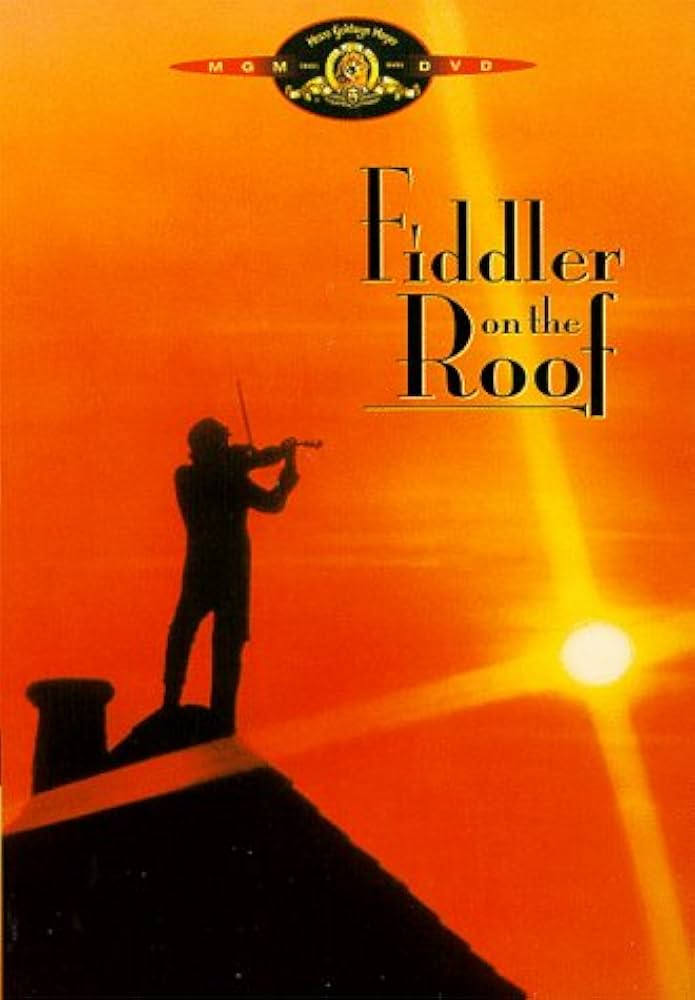
I didn’t realize or remember, until recently, how complete those movie soundtracks were, until I sat down to watch Fiddler on the Roof for the first time since I was 8 years old. I realized, as I watched, that I knew absolutely every word of the dialogue, even though I hadn’t seen the film for more than four decades. And I realized, as I watched, how very little of the story I had understood, as a kid. I thought I got the whole thing—I had no idea the depth of my ignorance.
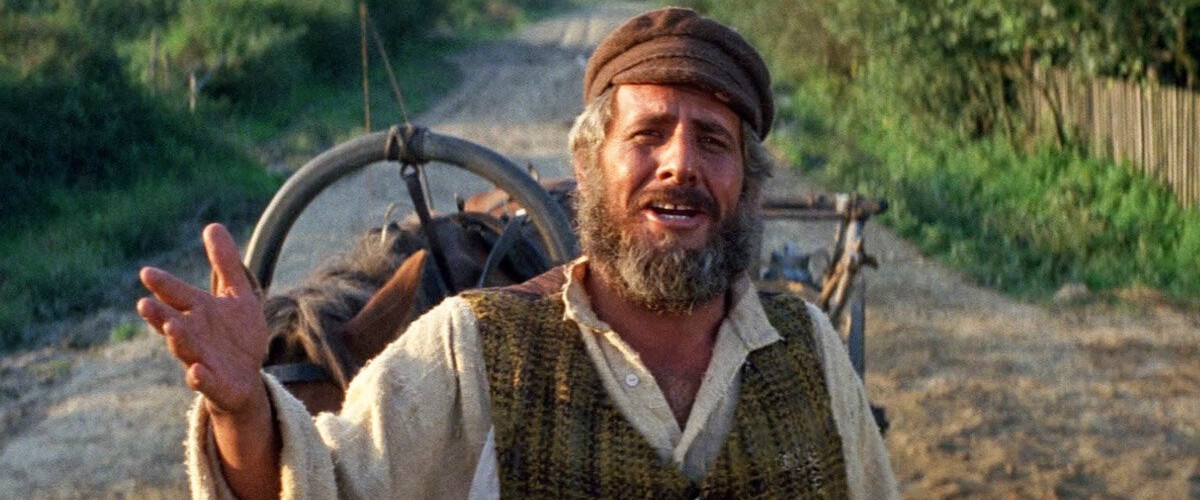
Here’s what I did understand. The film’s main character, Tevye, is a Jewish man in a small village in Russia, with five unmarried daughters. One by one, the three oldest daughters ask to marry men of whom he doesn’t approve. The oldest and second-oldest talk him around to agreeing, but he puts his foot down with the third, and disowns her when she insists on going through with her marriage. Then they all have to move.
I was content with this explanation of things—but of course there’s so much more going on than this bare-bones construction of what I understood.
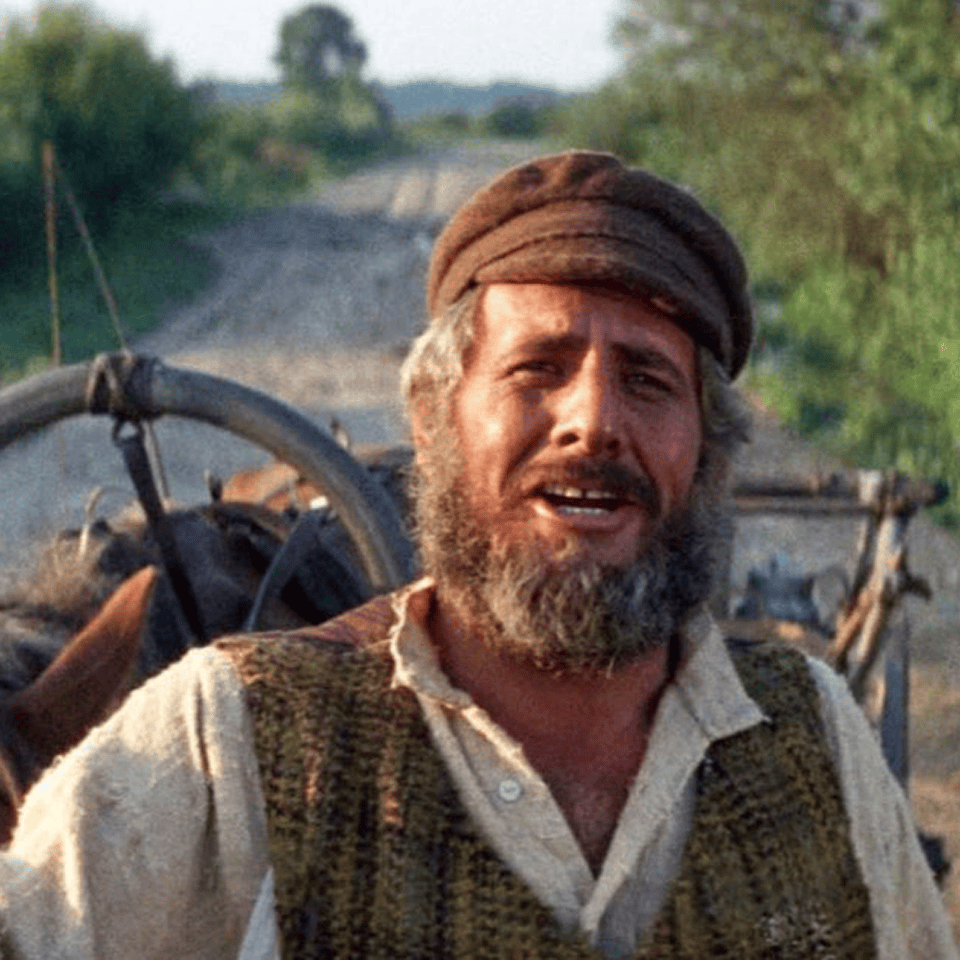
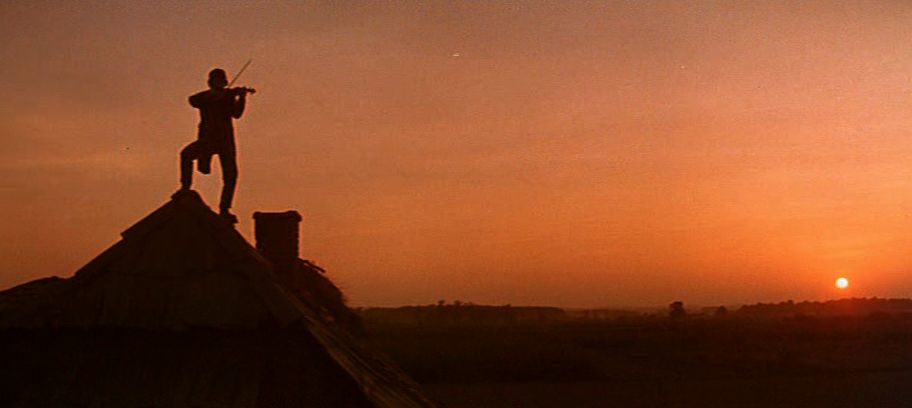
To begin with, a great deal of the dialogue (and song) is Tevye’s sort of running commentary addressed to God. I’m not sure whom I thought he was addressing—maybe us?—but I definitely didn’t understand the prayer-adjacent nature of his narrative. He registers requests and gentle complaints, makes wry observations about politics and neighbors, and compares the precarious position of Jewish people to the hazardous pose of someone standing on a rooftop fiddling, with only Tradition enabling him to keep his balance. I missed pretty much all of that, even though I had the dialogue memorized.
I’m trying, now, to reconstruct what I did understand. I’m not sure how much I understood about Judaism, for starters. I probably would have told you that Jewish people “didn’t believe in Jesus”— and I could have told you that Jesus himself had been Jewish—but my frame of reference had more to do with what they didn’t believe than what they DID. The movie itself explained a number of details of custom and belief, both secular and religious, ranging from match-makers and education to Sabbath and head-coverings and prayer-shawls.
But despite my Christian-centric definition of Jewishness, I completely missed the entire dynamic of “The Others” in the village. I didn’t get that he meant Christians, and I didn’t understand that the Christians were definitely in the power position.
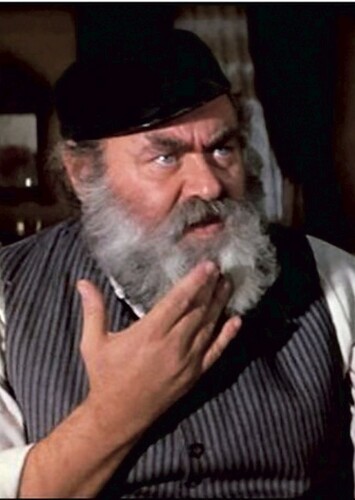
When Tevye and the butcher repair to the local pub to celebrate the marriage they’ve just agreed upon (between the butcher himself and Tevye’s eldest, Tzeitel—an agreement Tevye is shortly going to turn around and break), there is a moment of deep tension when Tevye drunkenly stumbles into another man, a Christian. All the Jewish men stand in frozen silence, waiting for the other’s response—which luckily turns out to be a congratulatory hand outstretched, and a shared dance number.
Everything from clothing to dance steps are different, between the two groups of men, but that entire dynamic went right over my head. I suppose the clothing (Jewish or Christian) all looked equally old-fashioned to me, and the lyrics (Russian or Hebrew) equally foreign. I completely missed the “us-and-them” nature of the situation.
There are numerous moments in the film, both large and small, that similarly went over my head. One of the Jewish men asks the Rabbi if there is a proper blessing for the Tzar. The Rabbi replies that yes, the proper blessing is: “May God bless and keep the Tzar… far away from us!” I didn’t understand the politics, either in that small joke, or later when the entire Jewish community is forced to leave the village.
I didn’t understand that Tevye’s choice to put his foot down and disown his third daughter, rather than accept her marriage, wasn’t just because he’d been pushed one too many times.
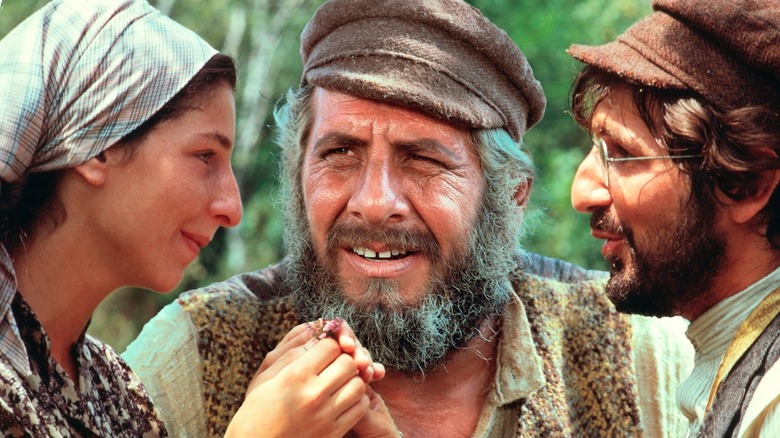
It was because her choice of husband was a Christian. Or, more to the point, wasn’t Jewish.
The main theme, the tension underlying almost everything that happens in the film, is the precarious position of the Jewish people among their non-Jewish neighbors… And I didn’t get that at all.

I wasn’t much older when we stood in Anne Frank’s attic in Amsterdam, and talked about what happened to her, and why. I was nine when I read her diary, having just walked through the tiny confines of her hiding place. I was nine when we went to Auschwitz, with its rooms full of suitcases, and shoes, and glasses, and hair.
The words “holocaust” and “pogrom” were in my vocabulary then, and I understood their definitions and recent history. It was recent, when we were there, less than 40 years since humans had been extinguished where we stood on that tour.
All that to say, I wasn’t sheltered. I was educated, sharply. That’s why I was surprised to realize how much of Fiddler I had missed. I had the dialogue and songs memorized, but that moment of tension in the pub—the tense faces of the Jewish men waiting to see if the Christian man will retaliate for being jostled—was news to me, when I watched this time. Memorized dialogue notwithstanding, clearly I hadn’t actually watched this film since before our visit to Europe.
More comically, I didn’t understand the whole graveyard-nightmare scenario that Tevye concocts to trick his wife. Golde is over the moon about the match between Tzeitel and the well-to-do butcher, but Tevye has given in to Tzeitel begging to marry, instead, the poor tailor whom she loves.
Faced with the problem of telling Golde about the change in plans, he fabricates a scary dream in which her own grandmother warns him not to let her marry the butcher. The creepy-ghosty-screechy grandmother-dream scared the pants off me as a kid—but I had virtually no grasp on what that was all about.
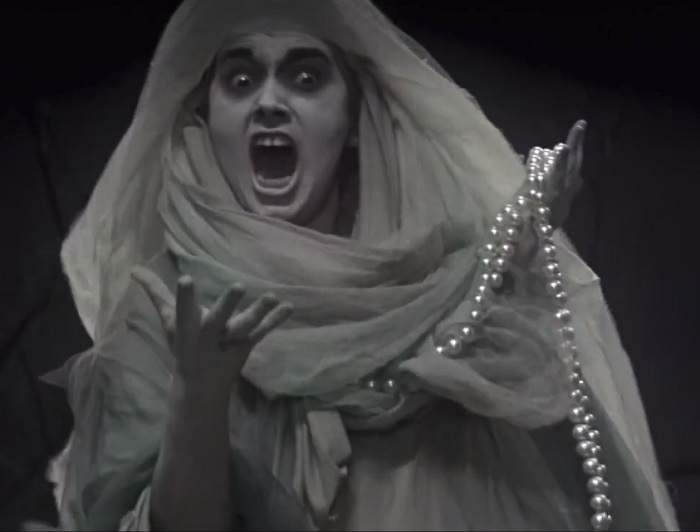
I guess I got the basics—that it was getting him out of the butcher-agreement—but I missed the context of the marriage dynamic, that he invented the dream, and that he had to go to such lengths to get Golde onboard with the change in plans (and dodge blame for upsetting her expectations).
I was a smart kid, and well-read, but I was only eight… It wasn’t that I was “too young” to be able to understand it—I understood Auschwitz and Anne Frank’s murder, just a year later. I just didn’t grasp the CONTEXT, when I watched Fiddler as a youngster. It just took me forty years to circle back around and understand it.
I’m caught up now. (About time.) And I still love the music. I’ll have “To Life! tTo Life, L’chaim!’ stuck in my head for days.


 Kana's Chronicles
Join the Conversation!