
I could be said (with some amount of understatement) to have a penchant for list-making. I came by it honestly, if there’s a gene for that—my dad actually kept a list of all his lists. (A meta-list?) I’m sorry now that I never asked him what his List List was for. Were there lists he worried he’d forget?—did he actively use it as a reference? Or was it just the capstone of his list-keeping, its function simply to complete the structure?
Suffice it to say I grew up in a household with a “list culture.” When I was a kid we had a family Packing List, mimeographed in that purple ink that smelled like bubble gum, a copy for each of us before each trip, to checklist ourselves and make sure we packed everything we’d need. When I was in high school, even the family grocery list had a template, photocopied every week, organized to the geography of our supermarket.
These days, of course, we’re not Xeroxing our lists. I love my “Packing Pro” app—a list that lets me categorize and personalize and create a list for every trip, from the Master List I’ve curated. A list like that is a straight-up joy! Our grocery list, too, is on the phone. We can holler at Alexa from the kitchen to add an item, and I can squeak one last thing in, even while my husband is actually at the store.
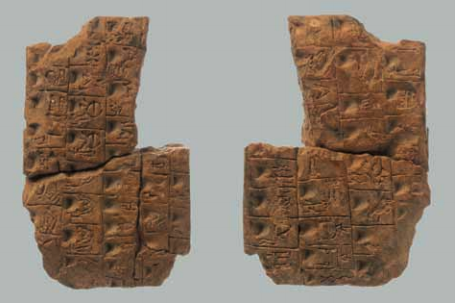
The world’s oldest surviving list—five thousand years old—was written on clay tablets by a Sumerian, in what is now Iraq. It’s a list of people’s titles and occupations. Once again, I find myself wishing I could ask “what’s it for?” Was it someone’s payroll? Was it a scribe-training exercise? Was it school Career Day?
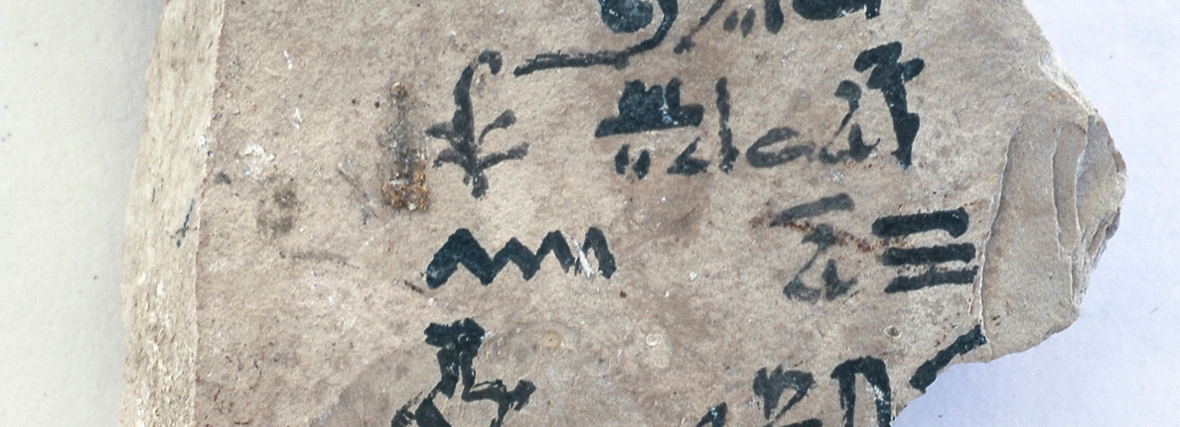
A millennium more recent than the jobs-list, over in Egypt, we have the world’s first abecedary. That’s a word-list arranged in alphabetical order. (Named, as you can see, for our alphabet: ABCD-ary. Unlike the word “alphabet,” which is named for Greek letters. Alpha, Beta, Irony, anyone?) I find myself wondering, though: how do you alphabetize writing that consists of hieroglyphics? Sure, you could group them by initial sounds… but even so, how would you order them if you didn’t have an alphabet to tell you their sequence? I’m curious what’s on that list—what the words are—and I’m even more curious why it was in someone’s tomb. He taught the kids’ English Egyptian class?
When I was working as a freelance writer, the hottest format was the “Listicle”: an article in list format. “Three Things You Can Do While Standing on Your Head.” “Six Ways to Organize Your Underwear Drawer.” Clients demanded listicles from things that made no sense as a list—because that’s what people would read.
Lists have their own language… their own words that, paradoxically, both end them and expand them. A list of people can be ended with “et al.“—a Latin abbreviation that means “and the other guys.“
And of course we also have “etc.”—which means “and more stuff like that.” That’s a good enough way to end a listalogue. Etcetera, the end!
 Kana's Chronicles