

I never realized that John Steinbeck was a biologist. It’s not what he’s known for, certainly, and it’s not what he was educated for, but it’s what he did, for a time. Actually, with regard to education, he left even his English degree incomplete… not that its lack held him back from winning the Nobel—which is a testament to what’s actually important, in a writer:
He had things to say, and he said them well.
When I was working on my own degrees (also combining English & biology), I would tell you that a degree in Creative Writing was like a workman’s wooden box, well-crafted and polished. A lovely thing to have—but absolutely no use if you had nothing to put IN it. If you had nothing worthwhile to write about.
If you had no LIFE worth writing of.

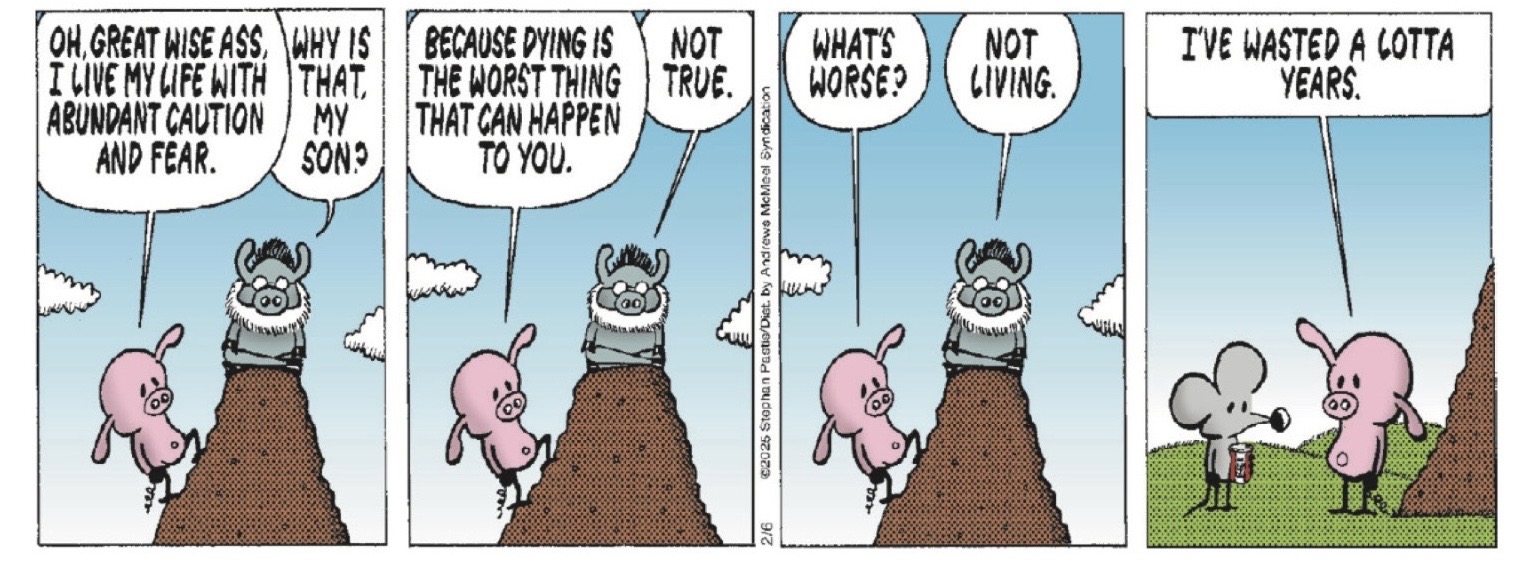
Steinbeck caught hold of the same thought from the other end, in his Log from the Sea of Cortez: “The true biologist deals with life, with teeming boisterous life, and learns something from it, learns that the first rule of life is living.”

The first rule of life is living.
That’s the first rule of writing, as well.
I started reading Steinbeck’s book—about a biology expedition-by-boat with his ecologist buddy—back in February, when we were headed, ourselves, to Loreto, in Baja California on the Sea of Cortez.
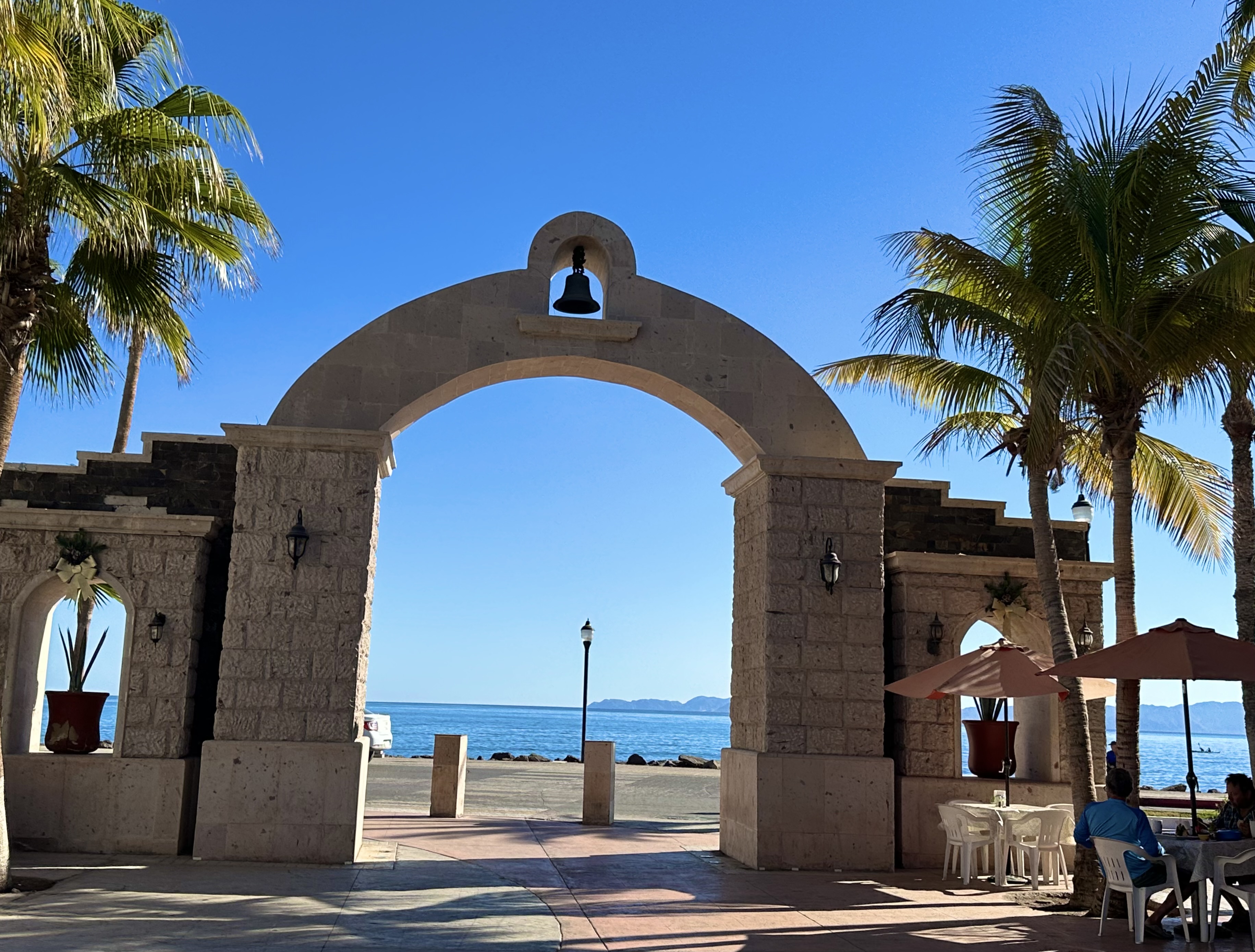
I was setting the mood for myself, with my reading, but I didn’t get very far with it, then. I was concentrating my time instead on my DuoLingo Spanish lessons.

Here’s the thing. I took six years of Spanish classes in high school and college, including an undergraduate semester of Literature in Spanish. I have a pretty good ear, and a pretty good accent. I have a pretty good vocabulary. I have pretty good grammar…. But.
(You knew there was a “but” coming, didn’t you?)
But. I have had absolutely no courage. For 35 years.
My mom has been learning Spanish on DuoLingo, and she has an impressive streak going, something like a thousand consecutive days of participating in her Spanish lessons. She inspired me, and last year I jumped back into language and tried out DuoLingo myself.

The structure is markedly different from those schoolyard Spanish classes. There’s less explaining, and more doing.

Classroom Spanish involved lots of diagrams and lengthy explanations. “These are all the subjunctive forms of this irregular verb”…
…and then we’d have to think-our-way-through whether this sentence required the subjunctive, and then which form of which verb we needed to use there, before we could deploy it.
I could do all that on a classroom exam, but my brain BROKE every time I found myself face to face with a human being who might want me to use it!
I absolutely froze up, every single time. For 35 years.
Even at times when I knew a person would be grateful for the help, and wouldn’t be judging my grammar—like the time I stood, silently, through an entire attempted conversation at an airport ticket counter. I knew perfectly well what the traveler was saying to the agent, and I’m sure I could have cobbled together the agent’s response, in turn… but I stood there while they floundered—stood in silent, flush-faced shame.


DuoLingo, in contrast to the classroom, doesn’t spend much time explaining ABOUT the different verb forms for a situation. It shows you what to use, and puts you to work DOING it. And not just in writing, but also speaking, and listening. Over and over and over and suddenly you’re not thinking ABOUT the verb, you’re just USING it.
When we touched down in Mexico, I didn’t yet know if my several months’ study would break me out of all those years of brain freeze. I’d been practicing my ass off, and had even played Pride & Prejudice, twice through, in the Spanish audiobook (just slightly slower than regular speed). Would it all be enough?
The fellow at the car-rental counter was clearly ready for transactions in English, which heretofore would have been my cue to chicken out… but I gamely waded in, in Spanish. Practically bouncing up and down with silly pride in myself, because I was finally doing it! At one point he switched to English to address Jon, and then slipped back into Spanish, and I didn’t notice, for several beats. I wasn’t “translating into English” in my head—I was just understanding him. More bouncing up and down!


Soon enough we were in situations where we didn’t have the “escape hatch” of an English-speaker… And we were okay.
It was dark and late when Apple Maps lost us, on the way to our inn. I had to jump out of the car to ask directions (a thing I’ve always hated doing, even in English) from a couple waiters who were putting up their cafe’s outdoor chairs… but I was able to ask, and to understand where they told me to go. As the week progressed I ordered food, and shopped, and asked questions, and answered small talk.
I got to come up with sentences that had never been part of any prepackaged practice-dialogue. Such as: “I’m buying this gift for the friend who’s caring for my many cats.”

On another day, having driven up the coastline to check out beaches, I asked a local gentleman if there were someplace nearby to buy towels, because we’d forgotten ours at the hotel. There wasn’t any shopping near, he answered, but we could borrow towels from him, and leave them on his porch when we’d had our swim.
In THAT moment, I felt I was Living. It wasn’t about the towels—those were incidental. It was about the goodwill inherent in his offer, an offer made because I’d had the respect (and—finally!-—the courage) to address him in his own language, in his own place. I walked into that warm saltwater with a grin almost wider than my face.


 Kana's Chronicles
Join the Conversation!