
Usually, when you read a book, it’s easy to tell how far along you are, and how much you have left. Not so with Dan Beachy-Quick’s A Whaler’s Dictionary—at least, not if you follow its instructions.
Usually, when you read a book, you don’t need instructions, but this one comes with a “How to Use This Book.” Are you intrigued yet?

When I was a kid, we had books called “Choose Your Own Adventure,” which were written in the second person, and presented the reader with choices as the story progressed. Those books came with directions: Turn to page x if you choose to take action X; turn to page y if you choose action Y. You could read the book twenty different times and never repeat the experience or the endings.
Beachy-Quick’s book feels to me like a Choose Your Own Adventure—a book you experience as much as read, a book whose connections can come together in any number of different permutations. It’s a sort of study (we’ll talk genre in a moment) of Moby-Dick, formatted as dictionary-entries, each item cross-referenced to other entries. Rather than reading front-to-back, the reader is encouraged to move through the web of cross-references by choosing from and following the referrals. I’ve just gone from Flame to Mincer to Groin to Description to Whiteness to Surplus to Magnet to Lightning to Corpusants… And on we go!
This is a genre-defying book. It could be considered prose-poetry, personal essay, creative nonfiction, meditation, academic paper… There’s even a “writing parable” in Mincer, and a series of Post-It-like sub-entries in Lines. When Beachy-Quick agreed to an interview, my first question was: How does he describe this book, or think of it?
Dan: The inkling for the book first came nearly 20 years ago now, as hard as that is to believe, and in some ways, it still feels as strange and inscrutable a text to me as it did then. My hope, in some ways, was to write an unclassifiable book everything you mention, and more. I wanted that in part because that’s how Moby-Dick has always felt to me, a book that is every sort of book, from philosophy to natural history, and far beyond. Mostly, I wanted to write a work of criticism that always wanted to get closer to the text it considered, rather than further away. I wanted to write in the squall of Melville’s great novel. I’d imagined a book that could be different every time you read it, to hint that meaning-making is an ongoing and endless activity. And I cared much about Melville’s own allegoric imagination, and so imagined a cross- referenced dictionary/encyclopedia might be an appropriately absurd form.
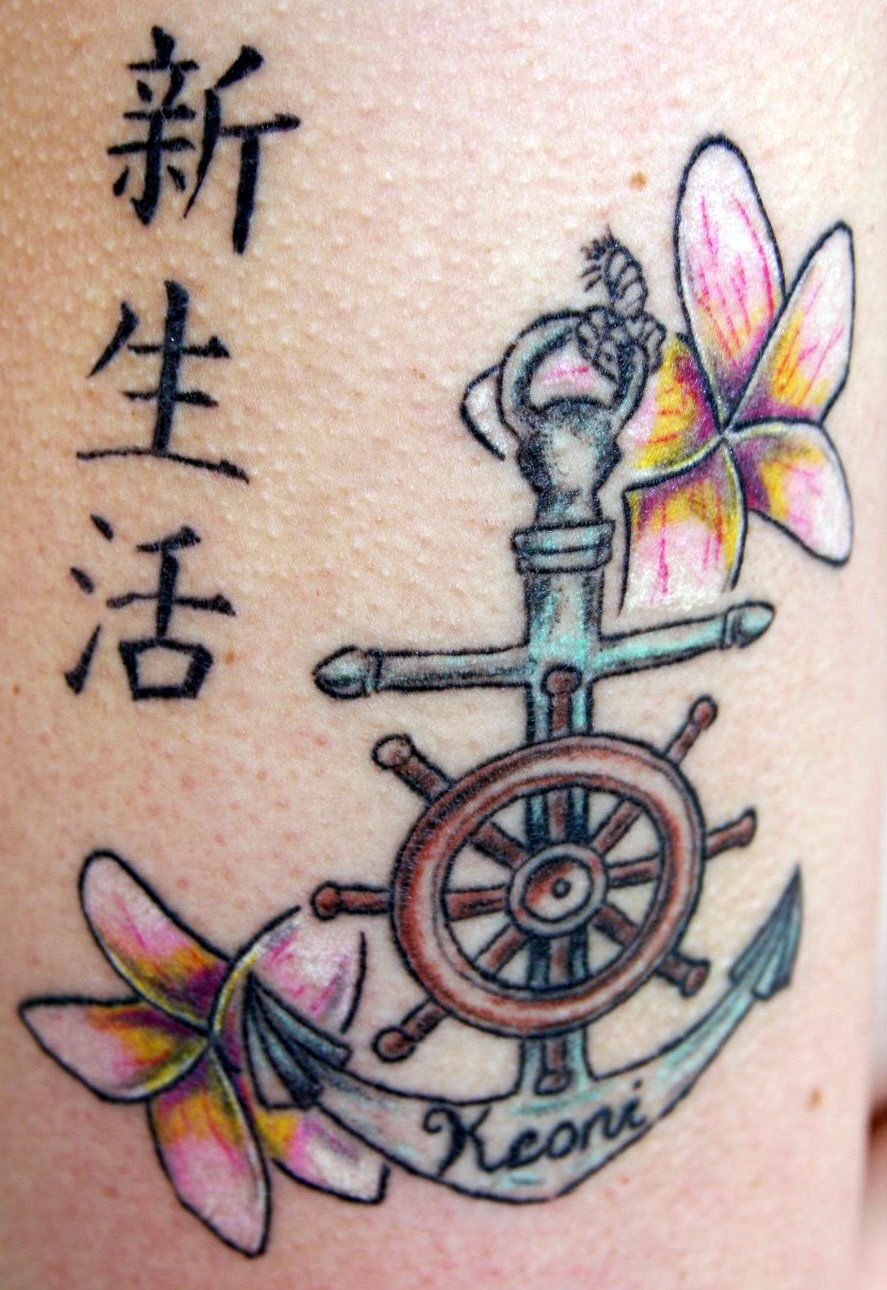
“The tattoo makes of the body a book, a library of lived experience… The body actualizes translation.”
~ “Tattoo,” A Whaler’s Dictionary
Kana: “Appropriately absurd,” how apt! Your “Tattoo” entry particularly speaks to me, as someone who wears a lot of stories on her skin. Do you have tattoos?
Dan: No, I don’t, funnily enough. But if I ever got one I decided it would be the illustration of the quincunx from Sir Thomas Browne’s The Garden of Cyrus. I think Melville would approve.
(Reader, I had to look that up! In case you share my ignorance on the point, here’s the gist: “The quincunx is a geometric pattern of five points—one central, four at the corners—that represents the divine order and interconnection of the universe. Browne uses it as a framework to explore its presence in nature, art, and human design, arguing it reveals a divine, purposeful structure underlying reality, from the arrangement of trees in an orchard to human anatomy and the structure of the cosmos.” Melville would absolutely approve!)

Kana: So, confession time… I didn’t realize what this book was when I ordered it. I’m writing a novel set on a whaling ship, and I thought I was adding to my library of research and source materials when I found “A Whaler’s Dictionary”—so when I realized it wasn’t the type of non-fiction I thought I was adding to the collection, I put it aside for a while… But as someone who’s read Moby-Dick a lot of times myself (partly in search of authentic detail, and partly because the book continues to compel me) I’ve found myself fascinated once I did, finally, open your book. It’s clear that you have a deeply developed relationship with Moby-Dick. What’s the story of that relationship?
Dan: I somehow graduated early from my undergraduate days at the University of Denver. A professor I didn’t’ know said she ran my credits and I was done with college which, in classic English major fashion, meant I was working at a coffee shop that winter pondering life. Part of that pondering was a keen sense of how badly educated I felt. “You haven’t read Moby-Dick, and you call yourself an English major,” was somehow the very marker of my ignorance. So, I bought a copy—the forest green Oxford edition. I had unlimited amounts of coffee during a shift, the place was mostly empty after the morning rush, and I set to it. I’d never read anything like it, of course, and it was the first book I had to make meaning of by myself—there was no class, no teacher, just me & Melville. It’s one of two books I got to the last page and turned back to the first. Even back then, I committed myself to poetry, to becoming a poet. I had this feeling that every question I’d ever asked, and more than I could ask, about the nature of poetry, writing, creativity, word, and world, were immersed in that novel. I knew I’d be called to do work with it, in it, one day; and I know I was too young, too immature a thinker, to do anything then. I waited until the book called to me.
Kana: What was the other book you started over immediately? I feel like I should add it to my TBR list.
Dan: WG Sebald’s Rings of Saturn.

“The word on the page acts merely as a delay between the author of the word, pulling expression from inchoate thought, and the reader, pulling the word up from the page into her own thinking… And how is it revealed? It’s inscribed.”
~ “Inscription,” A Whaler’s Dictionary
Kana: I’ve been following your directions to move through this book’s cross-references, rather than taking it front-to-back, and it’s reminding me of the “Choose-Your-Own-Adventure” books I enjoyed as a kid. Surely you didn’t write this front-to-back, so can you describe your process, and how this grew?
Dan: I loved those books as a kid! I can still picture their hallucinatory covers even now. The idea for the structure came before the book did; the vision of the structure sort of coaxed the book into being. The idea came from too much pondering on Chapter 32 in Moby-Dick, the “Cetology” chapter, with its witty, odd if not ill-informed entries, comparing whales to books of different sizes. The writing was pure madness, actually. I was teaching a grad seminar on Moby-Dick at The School of the Art Institute of Chicago, and instead of making my normal set of notes, I decided I’d write an essay on every thought I’d ever had on every aspect of the novel. I kept a running tally of entries on a separate page and in my head, and made the connections organically. But holding so many threads together at once felt somewhat insane. I was so scared of forgetting anything, dropping any one connection. I’m not sure I could write the book same way now, all these years later.
Kana: I’m trying to imagine keeping tabs on all of those threads! Okay, yours is already a pleasingly ocean-adjacent name, but I wonder: If you were to open this work with an offered name (a “Call me…”) as its narrator, what name would you give?
Dan: There’s so much in that “Ishmael.” I’d be harried to think of anything of equal meaning. I feel like holding to the Biblical is key—this sense of vast inheritance and vast inheritance lost. Perhaps I’d go “Call me Isaac,” the one burdened by, nearly blinded by, what he gained with his brother’s loss. Or to keep more parallel, “Call me Esau.”
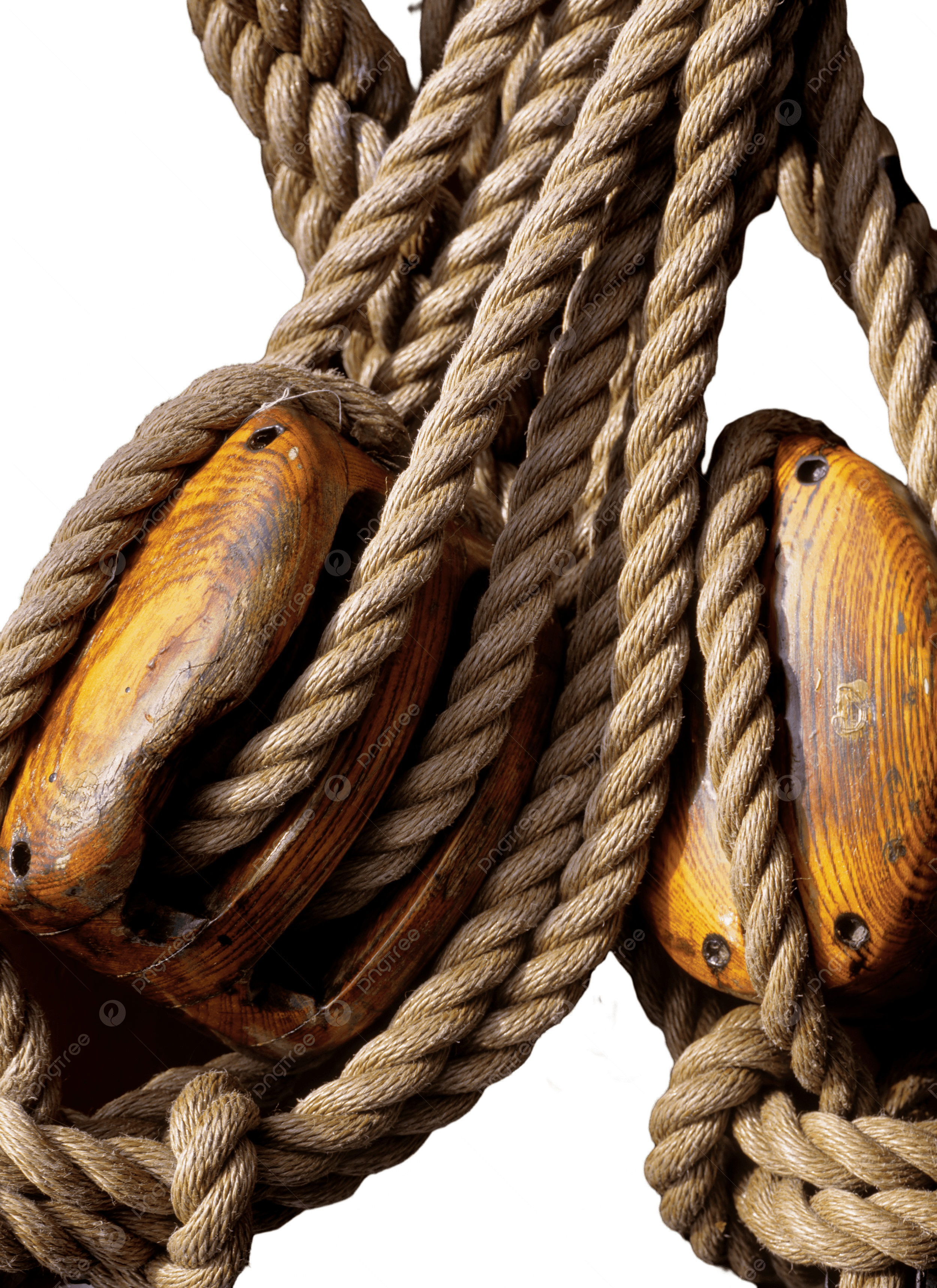
“The line is the most basic unit of verse… A metaphoric stretch can claim for the poetic line the same dangers as the whale line. The reader and the whaler are in the same boat.”
~ “Line,” A Whaler’s Dictionary
Kana: If you could sit down to dinner with Herman Melville, what would you want to ask him?
Dan: I think I might simply ask him what he was reading. So much of his life happens in the oceans of his mind, and the books he read were his whale-boats. As mine are for me, I suppose.
And on that pleasant image, Reader, I will leave you to drift. I have some whale-boats to read.
Dan, thank you!


Join the Conversation!