I had a pleasant email this morning from a fellow blogger, JJ Pickletoes, and one of his questions deserved some thought.
And as I thought, I remembered a principle I followed as a teacher: if one person asked the question, other people probably had that same question too. In a classroom, I’d address it openly for the whole class to benefit from the answer—and on the same principle, I figured I might address Mr. Pickletoes’s question to a broader audience here.

Here’s the question: “What advice would you share about your blog to others that are interested?” (I appreciate that qualifier at the end. Let’s assume we have an audience of interested parties!)
I certainly won’t position myself as an “expert.” There are people who have more followers, people who make money from their blogs, people who blog as a profession, people who have blogged for longer… But I can speak from the position of fourteen years of being a blogger, so for what it’s worth (and hoping it has some value), here’s my input.
1. Be a reader, and a commenter, and a contributing member of the blogging community. It’s actually one of the most rewarding aspects of blogging—the acquaintances and even friendships, formed among people who might never actually see one another’s faces… And I would expand the definition of “blogging community” to include people on different platforms as well—podcasters, vloggers, people who are putting their work and themselves “out there” for you to read or hear. There’s a self-serving aspect of this practice as well: When you “like” or comment or subscribe to someone else’s blog, they very often follow the trail back to your work. (Case in point: Mr. Pickletoes found my blog because I had first read and subscribed to his.)
2. Respond—thoughtfully!—when people post comments on your work. Someone has taken deliberate time to stop and comment on what you’ve written (in an environment where it’s most common for people to “like” and move on), so show them the same courtesy. And don’t stop at a “thanks-for-noticing”-type comment; engage with what they’re saying. Add to it, or draw on your own experience, or respond to what they brought to the table. When you keep going in that direction, you end up with some “regulars” whom you actually get to know. One of the rewards of thoughtful practice!
3. Include something to look at—where you can, and where it fits, or even randomly and just for fun. I find myself sometimes snapping a picture specifically so I have something to illustrate the thoughts I’m having, or the experience or “moment” I’m having, that might find its way into a blog. (I’ve also been having a great deal of fun recently with MidJourney, an AI image-generator, which adds a multitude of ways I can illustrate my posts.) Let’s face it: our eyes like to be entertained as well as our minds, and an eye-catching photo or drawing or doodle is an asset to your post. On that note…
4. Set a “featured image” for each post. It can be an image that’s IN your post, or something else entirely, but the featured image will pop up when your post is presented to potential readers—like in the WordPress Reader, or if it should be presented as a search result for something a reader Googled. Again, give your reader something to catch their eyes. Think of it like a book cover, which (ideally) will draw a reader’s interest.
5. Give descriptive “Alternative Text” for your images—and if there are key words to describe your post, fit them in here! I don’t know the “why” of this, but I do know that search engines seem to prioritize input from images’ Alternative Text, sometimes even above the written content of the post. (Alternative Text, by the way, is intended as a description of an image for a visually impaired reader. In WordPress you’ll find the text-box among the settings for any block where you’ve included an image.) You may not be writing FOR the search engines, but there’s no harm in helping them along…
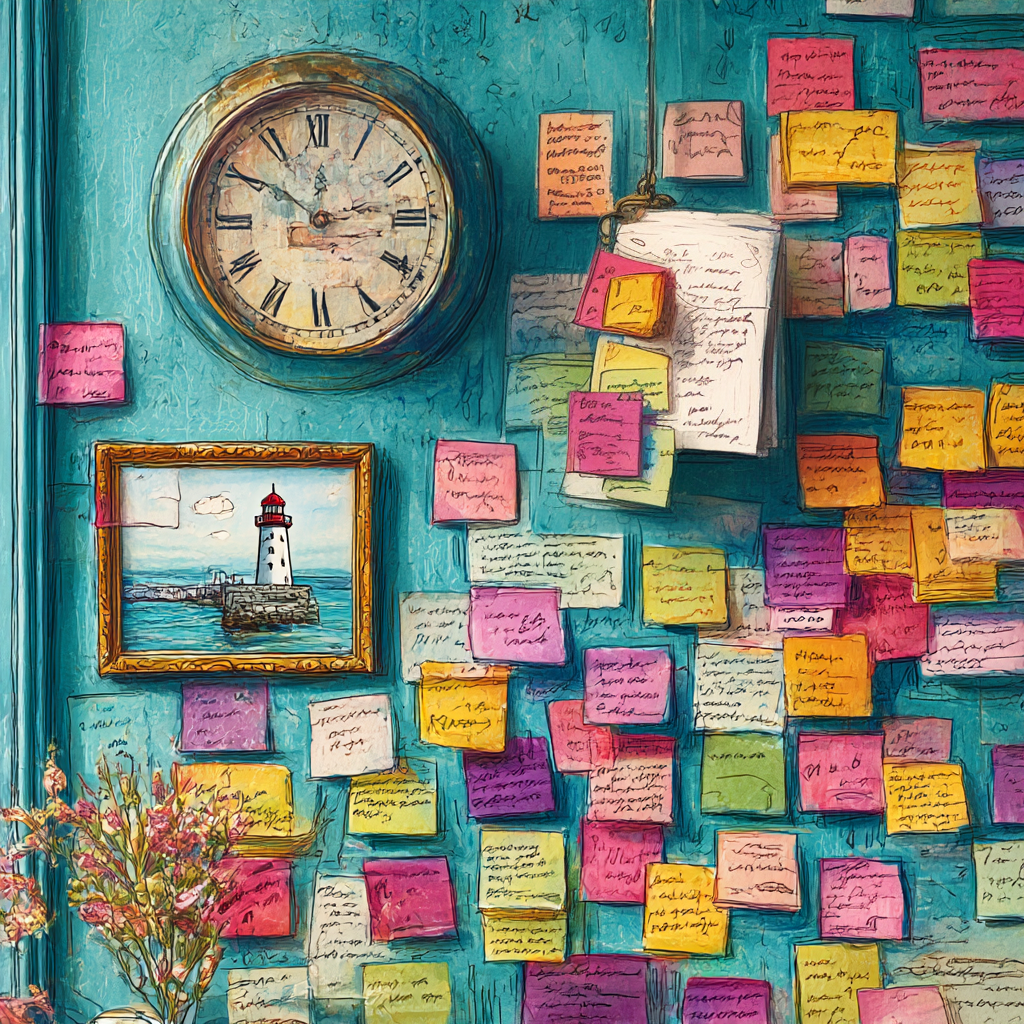
6. Keep a list, or keep Post-It pads around, and “catch” the thoughts you have. Sometimes the oddest combinations of tidbits find their way into a post together—but I would have lost them both if I didn’t write them down when they popped through my mind. (I don’t know about you, but the older I get, the better my “forgetter” works! I’m pretty sure there’s an inverse correlation: the more gray hairs I have, the fewer gray cells…) I always have a list on my phone, and I have sticky-note pads all over my house, and even in my car (in fact, I’m in the middle of writing a post about that). My son used to say, like putting a hashtag on a moment: “That sounds like a blog-title, Mom.” Now he’s grown and gone, and I have to catch those moments myself.
7. Don’t confine yourself to a restrictive subject or subject matter. Write about what YOU find to write about. When I started blogging, the “conventional wisdom” was that you should have a set topic for your blog, so you could build a following of people who wanted to know about that topic. I call baloney on that thinking! I was writing about my son’s ferret, and my daughter’s karate kick, and my husband’s singing, and what I was reading, and building a chicken house, and the frustrations of freelance writing, and how to make household cleaners from the things I could buy with my foodstamps, and… And and AND! And my following kept growing. Whatever you’re writing about, just be genuine.
8. Don’t be afraid to be open, and imperfect, and even vulnerable. People connect with you when you’re at your most HUMAN. That means not “tidying away” the messiness of real life, and not hiding the rough spots of your situation, or even your character. (I mean… Don’t share if it’s something on which you should plead the Fifth—but in that case you need a lawyer’s advice, not mine. Short of that, just be YOU.)
9. Post regularly. I didn’t write for several years after my husband died. Even after I’d remarried and life was liveable (and being lived) again, I didn’t return to the blog very often until a few months ago. My following dwindled from three thousand to fifteen hundred—because I wasn’t there! Now that I’ve been back, and posting several times a week, and engaging with other people’s blogs, and interacting with my commenters, my following and my site-traffic are slowly-but-steadily, correspondingly, increasing again.
10. Have fun! It shows. (And if you were slogging through it like a dreaded homework assignment, that would show too.) Besides, if we’re not enjoying this, what are we even doing here?
I hope all that is a help, Mr. Pickletoes! I’m honored that you asked it of me.


Join the Conversation!