
I was in high school when I had an odd encounter at my dentist’s office. I’d had my teeth cleaned, and I stopped at the receptionist’s desk to schedule my next appointment and confirm my insurance information, and to confirm that the remaining bill should go to my dad. There was an older lady there who was checking in, and she made a snarky remark about freeloaders sending bills to their parents! As a 15-year-old kid, I thought bill-to-the-parents was pretty appropriate, but I was so taken aback I was tongue-tied. I went home feeling disgruntled and offended, and vented to my mother about the weird encounter.
We had dinner guests that night—one of my mom’s law-school students (a retired Marine colonel) and his wife—and (having no interest in the grownup-guests) I hid unsociably in my bedroom until I had to come down for dinner. When I came down the stairs, I found myself face-to-face with the lady from the dentist’s office! It turns out she was the wife of the Marine-colonel student. It turns out she’d mistaken me for a college student. (Privately, I still thought her comments inappropriate—is it so out of line for college students to depend on parental support for health care? And even aside from questions of appropriateness, her comments were judgy and rude. I was not a fan.)
That was my introduction to Colonel Bob, but I quickly learned not to judge him by his wife. (His wife, in fact, was only around for a while longer—a change of which I approved, not that it was really my business.) Bob was—as you would expect from a Marine colonel—a forceful personality, but he had a sense of humor his wife had demonstrably lacked. He was smart and tough and interesting and funny.

He became more and more a part of the family, and he joined my mom’s law practice when he graduated law school. By the time I had my first kid, Bob merited honorary “grandparent” status.
There was the confusing matter, though, of the fact that he shared my dad’s name. “Grandpa Bob” was already taken—or so we thought. As it turned out, my son christened my dad as “Boboo”—and it stuck! By that time, though, Colonel Bob had gained a nickname of his own. He was a member of the volunteer fire department (being more fit than most men forty years his junior), and Christian was fascinated by fire engines. Whenever I took Christian to see my parents, “Firefighter Bob” would take him to the firehouse.
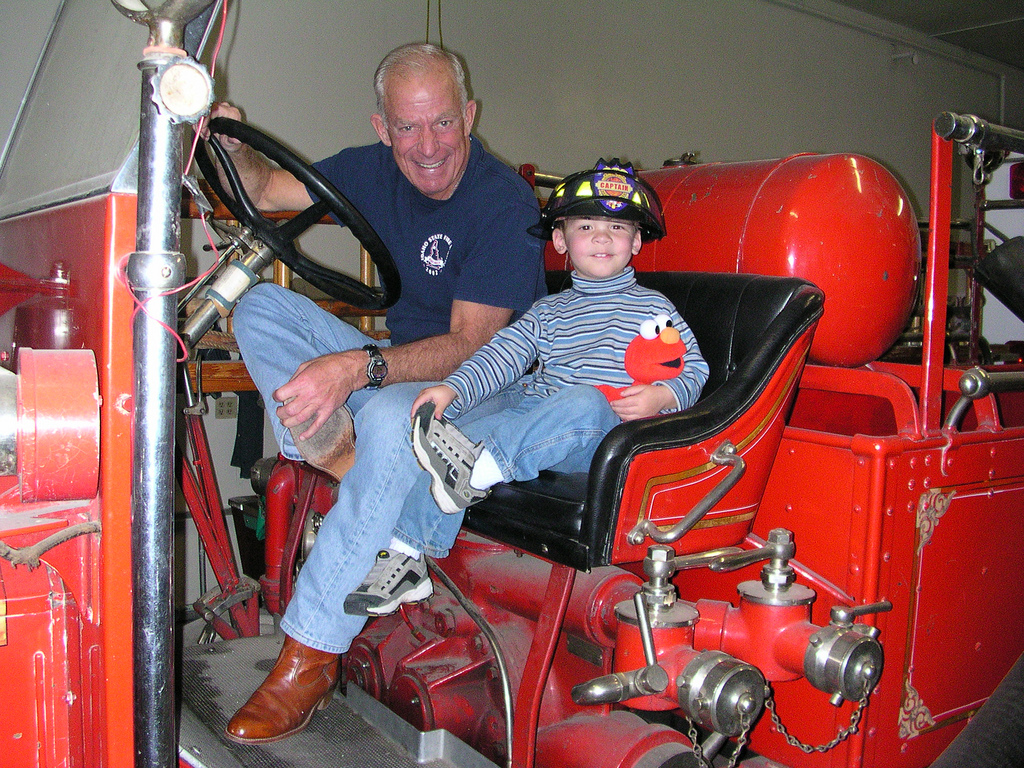
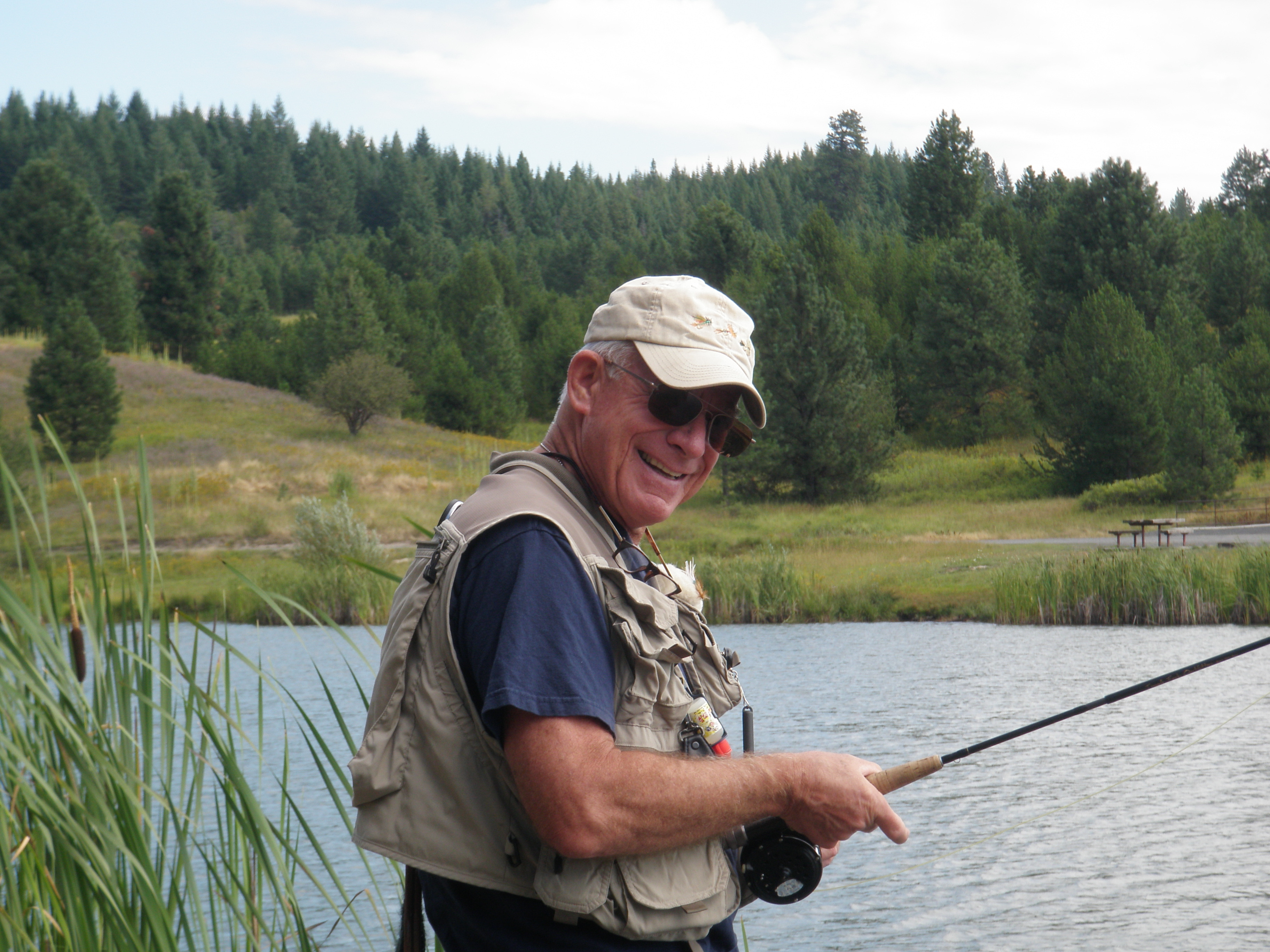
The two of them developed a relationship that expanded to fishing trips. Bob didn’t get to see his own grandson much, and he thoroughly adopted Christian. For that matter, he adopted me—never in any way that would overstep into my relationship with my actual dad, but Bob was like a “bonus dad.” Never more so than when my alcoholism crash-landed me into rehab.
My parents were on a Christmas cruise through the Panama canal when I imploded, and Bob was on his way to visit his actual daughter in California. He detoured instead to Boise, where I lived, and stayed up with me through a nightmare-night of withdrawal and angst while we waited for the rehab to open. I almost got turned away at the door, because I ‘d just gotten fired and had no insurance, and they required ten thousand dollars up front, which I surely didn’t have. Bob’s hand stopped me from turning back toward the door, and he handed over his credit card.
It’s not hyperbole to say that his generosity that day probably saved my life. I surely hadn’t managed to get Sober on my own attempts on the outside—and even if the rehab didn’t offer any “magic bullets” that I couldn’t have learned from A.A., it was the TIME there that I needed. The time without temptation, without having to fight the fight in my own head, the time to get clear-headed enough for A.A. to have a chance with me when I went back to the real world. (It wasn’t the absolute end of my drinking—I’ve fallen down on a number of occasions since. But it gave me what I needed to be Sober, and to get Sober again when I did fall down. It was the real start of my Recovery.)
A couple years ago I sent Bob a thank-you letter—for the many things, across the years, for which I had him to thank. I have to think God prompted me on that, because—although I hadn’t known he had cancer—he passed away just a few weeks later. I often haven’t gotten the right thing said at the right time—but I’m grateful that in this instance I did!
 Kana's Chronicles
Very interesting story,
LikeLiked by 1 person
Blessings on your life!
LikeLiked by 1 person
What an incredible man. Thank you for sharing :-)
LikeLiked by 1 person
This is outstanding
LikeLiked by 2 people
A wonderful and open share, Kana, he was a kind and caring person, …thank goodness you two met and connected, …and it’s great you were just in time to connect again, … take care, …✨
LikeLiked by 1 person
I enjoyed reading this post, thank you for sharing it. What a kind man he was.
LikeLiked by 1 person
Thank You for sharing this story. So beautiful, i could cry.
LikeLiked by 1 person
Really nice story!
LikeLiked by 1 person
What a wonderful man
LikeLiked by 1 person
Amazing story told nostalgically. To be a good person is a good thing.
LikeLiked by 1 person
Somehow you knew and you acted on your impulses. Amazing story. Amazing man!
LikeLiked by 1 person
A bonus dad. Sounds like you hit a jackpot of life.
LikeLiked by 2 people
Sometimes it really feels like an angel shows up in our lives.
Thank you for sharing this touching story!
LikeLiked by 1 person
Kana,
Your story about “Fireman Bob” it was really interesting period it sounds like he was quite a gentleman. Is retired Colonel (light Colonel) myself I find that it’s interesting how many of my contemporaries in the military when they retire end up in some type of public service.
I don’t know if they’re training, or our emphasis on service that makes so many of us volunteer for these types of duties such as being a fireman.
In my case when I retired I went into teaching. Again public service. And it’s interesting how many other male teachers that I found had been in the military. We had a couple of gym teachers, history teachers and the math teacher had all been in the military. Some had just been there for a couple of years and others had been there for a career like I was.
I always remember chewing out a teacher one time it was complaining about the fact that I didn’t have a teaching degree and she wanted to know how I could possibly teach high school kids. Undoing the damage to 18 through 20 year old’s that teachers like you had done. Needless to say she was furious. But she tried to insult me and I just returned the compliment.
What I was trying to explain to her is that those of us in the military deal with kids right out of high school and our job is to make them into soldiers or marines or sailors or guardians (space force) and make them productive. So when I began teaching I already had a lot of the human resource training that I needed to teach. Additionally I had been a classroom instructor in the army for about 18 months and I can tell you that our teachers would have a difficult time teaching in an army school.
When you teach in an army school you’re under constant supervision. My teams were decentralized, and we traveled all over the United states teaching at various military bases and reserve centers. I never knew when an evaluation team would pop up and there would be a camera on a tripod and they would record every movement and everything that I said for that five day period.
When we returned to our base we would then have to sit down for another week and they would critique every action every movement everything that you said and go over the class with us. We would have teaching experts that would come in and explain to us what we did right or did wrong offer suggestions and in some cases really chew us out for what we did. Not only were we evaluated by our own teams we were also evaluated on every class by the people that we taught. If you had a bad evaluation the technical team would make sure that you were made aware of it.
Our teachers would get upset when the principal would come in once a year to do a in person evaluation which they were required to do.
I’m sorry I sort of got off key there but I think you’ll find many military personnel in service organizations or an organizations where they can use their training and their experience for the betterment of the community or company that they’re working for.
Needless to say I enjoyed teaching, I’m still in contact with many of my students. They’ll either call or e-mail me or drop me a comment on Facebook just to see how I’m doing. I run into them often in stores and at the mall and it’s always interesting to talk to them and see where their lives have gone. And I’m sure it was the same with Fireman Bob he needed to continue his service to his community. I think it’s just part of our training.
I value the 27 years that I spent in the active army and I also value the 17 years that I spent teaching. I think I made a contribution to the nation and after retirement and to my community and the students that I served.
“Hardcharger” http://www.ptaylorvietnamadvisor.com
LikeLiked by 1 person
When I trained as a teacher we had whole classes on things like “Classroom Management” (which was essentially managing behavior), and that’s exactly what you didn’t need, when you came out of the military! If only that insulting other teacher could have known…
LikeLike
Beautiful story! It’s a blessing to have “extras” in our life.
LikeLiked by 1 person
This is a very beautiful story of a wonderful man who made a powerful impact in your life. Thank you for sharing.
LikeLiked by 1 person
Thanks for sharing Boboo with us! I grew up without a dad and was constantly seeking people to fill that void when I was younger. My grandfather did what he could when we were together but that wasn’t all the time. One of the few people who made me feel like I mattered was a police officer named Brooks Jackson who was a Vietnam vet. I was in and out of trouble a lot and he was one of the only people that really cared.
LikeLiked by 1 person
I definitely realize how Blessed I was to have not only a dad, but a Bonus Dad as well!
LikeLike