
Tricia Mitchell just posted a lovely blog about the castle in Heidelberg, Germany–accompanied by some of her own photos and memories of this castle over the years, and posing the question of whether her readers had memories to share. I wrote to her that although it’s been almost three decades since I’ve been there (and although I was only nine at the time) the details stick with me–like the memorable remains of the exploded powder-magazine tower.
Actually (here’s a bit of synchronicity), the inaugural entry in my 1984 European travel-diary was dated twenty-eight years ago today, as we headed across-country from Idaho to Chicago O’Hare, visiting family members along the way. Less than a week later we were flashing past the blue lights of the runway and out over the blackness of Lake Superior–hours past our usual bedtime–launching our first-ever off-the-continent adventure. My father the Planner detailed a six-month itinerary, looping and wandering through eighteen countries, some of which no longer exist on today’s maps. And our mother customized our rented bright green V.W. bus–which would serve as “home base” for half a year–with drawers under the seats, hanging-rods across the back, multi-pocket organizers hanging from the seats, and other “homey” touches.


’84 album
When we stayed with dairy-farming friends near Stratford, we sneaked up and down the servant staircase in the century-old stone farmhouse, and took a whole roll of film posing my sister’s teddy bear, Tony, around the farmyard. When we stayed in an apartment converted from the basement servants’ quarters of a London townhouse, my sister came bolting out of the bathroom in excitement to tell us, “There’s a special bathtub just the right size for Tony!” Neither of us had yet been introduced to the concept of the bidet…
 When we descended into the underground areas of St. Paul’s Cathedral in London, three of us didn’t think twice about the folding chairs set up for a recent ceremony. My sister, however, stopped in her tracks and cried out (to the amusement of every tour-group in the crypt), “There are DEAD people under this floor, and someone has gone and put CHAIRS on them!!”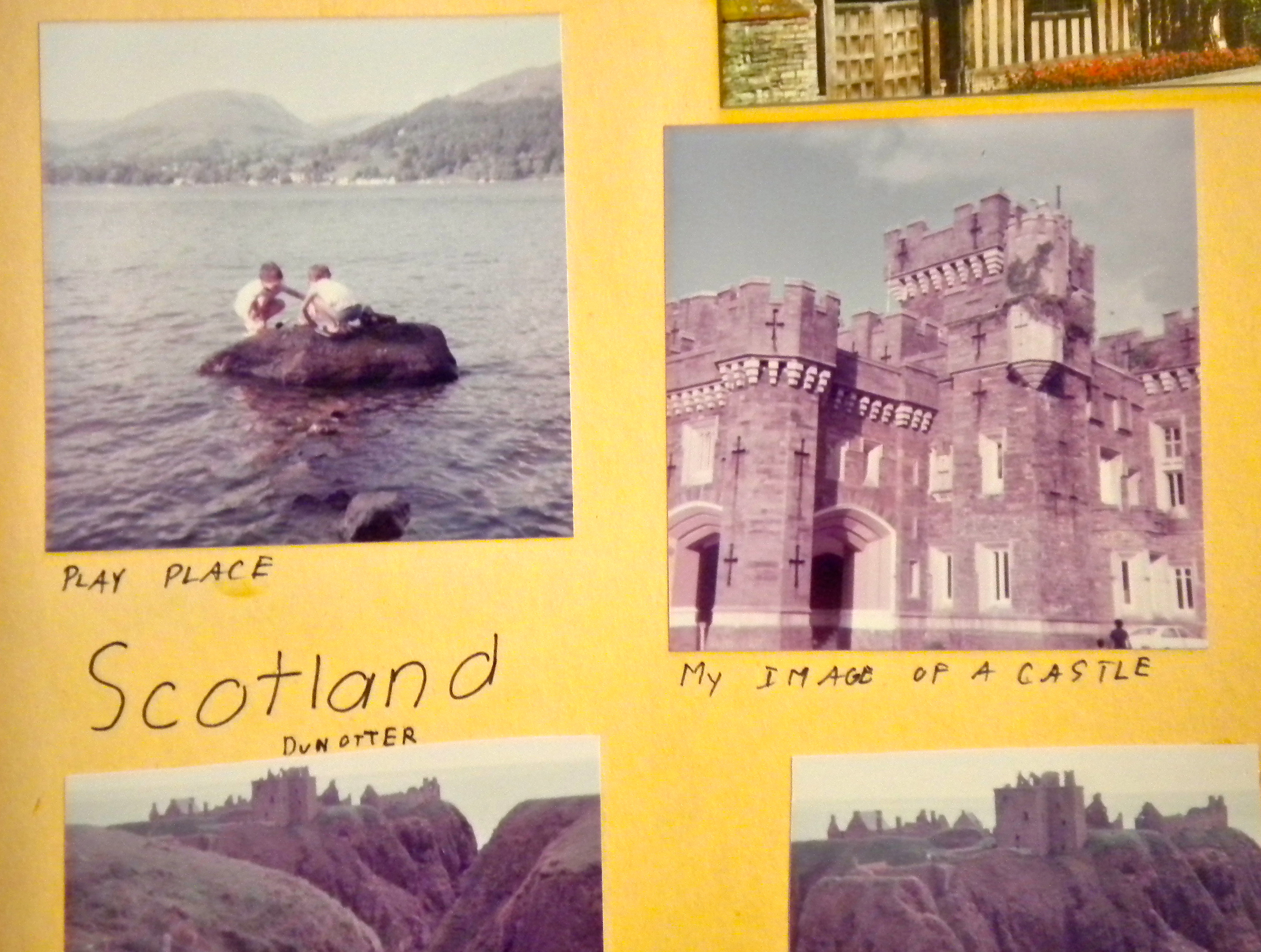
We visited Anne Frank’s hidden attic in Amsterdam, and I began to read her diary that night, able to picture precisely the little suite of attic rooms. After Auschwitz, we talked late into the night about the horrors of the Holocaust. We read Classics of literature while visiting the locales where they were set. We visited tombs and birthplaces of historical figures, and sat in the bench of Anne Hathaway’s cottage where Shakespeare is said to have sat when courting her.
When our parents set aside half a day for the Louvre in Paris (thinking that’s all the art we’d be up for) we dragged THEM back for a second full day. We weren’t wild about the Impressionists, but we were fascinated by the rest. I bought a stack of postcards-of-paintings, tucked them into my sketch-kit, and tried to draw my own versions. (Though I do remember my mother suggesting I add underwear to some of the naked people I was drawing after dinner in a fancy French restaurant…)

And even in places where the “Ugly American” tourist-stereotype preceded us and affected local attitudes, our parents found that having young kids in tow often gained them a warmer reception. (I’m reminded of my son’s response when his second-grade teacher complimented his consistently kind manners: “She doesn’t realize that Manners aren’t optional when someone has you for a Mom.” OUR mom is like that too.) We learned to say “please” and “thank you” in the appropriate language for every border we crossed–and my dad also figured out how to say “Can you please suck the Diesel out of our bus?” in French…

I still marvel at my mother’s packing-job for this trip. She had sewed a mix-and-match wardrobe of red-white-and-blue for my sister and me (with matching outfits for our two dolls) and joked that if she lost one of us, she could point to the other and indicate “one just like that.” Failing that, she could use one of the dolls. She sent ahead caches of English-language books for us to pick up along the way, but other than the reading material, the four of us lived for six months out of five suitcases–one each for clothing, and the fifth with camping gear.
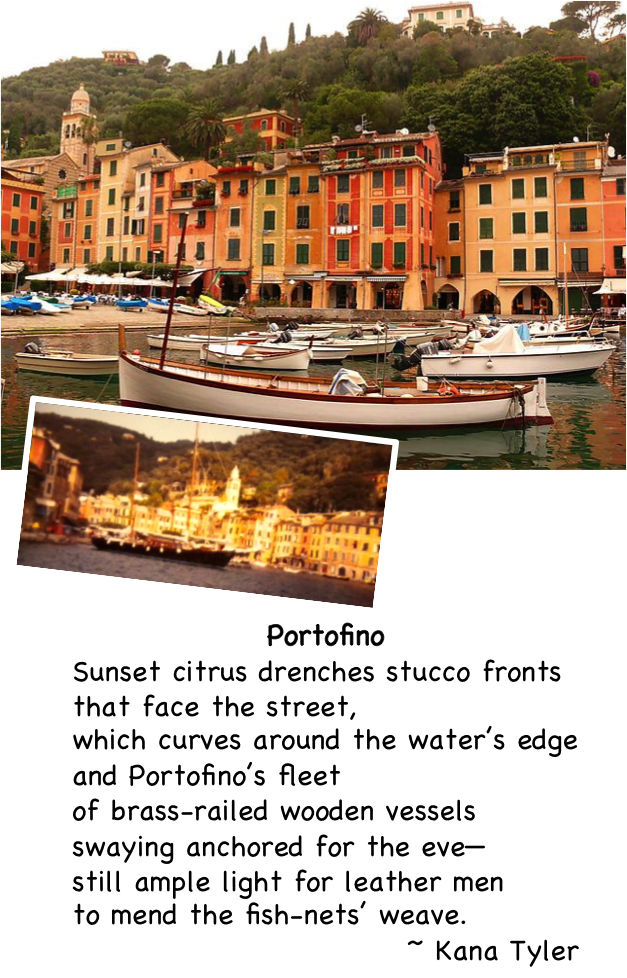
My sister lost five or six teeth during the trip, and the Tooth Fairy had to keep paying off in different currencies. We hiked in the Swiss Alps; we donned white coveralls and slid down wooden bannisters into a Polish salt mine where the miners had carved fantastical statues out of salt; we played “Queen of Idaho” in the extravagant Bavarian castles of “Crazy Ludwig”; we bought tulips at a Dutch flower auction; we rented paddle boats on a Hungarian lake; we hired a gondola in Venice (from a gondolier who said he couldn’t sing–so we sang Rounds to him instead); we made brass-rubbings of tombs; we collected charms for a memory-bracelet; we attended performances of yodelers and bagpipers and ethnic dancers; we rode trains and ferries and subways and carriages and double-decker buses; we went with a Dutch friend to be fitted for wooden shoes (not touristy, painted ones, but the type she wears in her garden); we tucked messages into a bottle for a Scottish friend of our dad’s to build into the tumbled-down bit of a 400-year-old dry stone wall he was re-assembling along his field. Maybe another farmer will find our notes a few centuries from now when the wall needs repair again.

We traveled behind the Iron Curtain, and watched at the border between the Germanies while Soviet soldiers spent hours removing absolutely everything out of our bus, reading my mother’s diary, and unwrapping our Christmas presents. At the Polish mine, a hard-used miner my grandfather’s age approached us, removed an enameled shield from his jacket, and pinned it onto mine. Our Polish friend translated his quiet, almost shy explanation: it was an award for saving a life in the mines, and he wanted me to have it because he liked my smile.
We had a National Geographic map of Europe with us, and every evening during those six months we would open it up to trace the day’s adventures with a highlighter. The more permanent paths, however, were being highlighted in our minds. We may have been raised in an Idaho potato-farming town of a just few hundred people, but our parents gave us the gift of understanding–early on–that we’re citizens of the World.


Join the Conversation!